

Table of Contents
- Introduction
- Why Vaccinations Are Important for Golden Retrievers
- How Dog Vaccines Work
- Core vs Non-Core Vaccines
- Vaccines and Golden Retriever Vaccination Cost
- How and When to Use Golden Retriever Vaccination
- Golden Retriever Puppy Vaccination Schedule (6–16 Weeks)
- First Vet Visit Golden Retriever Vaccination
- Preparing Your Puppy for Vaccination
- Frequently Asked Questions
Golden Retriever Vaccination Guide
One of the most essential parts of raising a healthy dog is following a proper Golden Retriever Vaccination Guide. Bringing home a Golden Retriever puppy is an exciting experience, but it also comes with important responsibilities. Vaccinations protect your puppy from dangerous and potentially life-threatening diseases while helping build a strong immune system, healthy coat, and an active routine during the early stages of life.
Golden Retrievers are friendly, active, and highly social dogs. Because they often interact with other dogs in parks, training classes, daycare centers, and boarding facilities, they are more likely to be exposed to contagious illnesses if they are not properly vaccinated.
Following a complete Golden Retriever Vaccination Guide ensures your dog receives protection at the right age. Missing important vaccines or delaying booster shots can leave your pet vulnerable to infections that are expensive to treat and, in some cases, impossible to cure.
This guide explains everything you need to know about Golden Retriever vaccinations, including puppy vaccine schedules, adult booster shots, core and optional vaccines, possible side effects, and tips for keeping your dog healthy throughout every stage of life.
Why Golden Retriever Vaccinations Are Important
Golden Retriever vaccinations are one of the safest and most effective ways to prevent severe diseases in dogs. Instead of waiting for a Golden Retriever to become sick, vaccines teach the immune system how to recognize and fight harmful viruses and bacteria before they cause illness.
Without vaccinations, even a healthy puppy can become seriously ill after brief contact with an infected animal or contaminated environment.
Vaccination helps protect against diseases such as:
| Medical Name | Common Name | Easy Explain |
| canine parvovirus | parvo, canine parvo | A highly contagious virus that causes severe vomiting and diarrhea, especially in puppies |
| Canine Distemper | Distemper, Canine Distemper Virus (CDV) | A serious viral disease that affects the lungs, digestive system, and nervous system |
| Rabbies | Rabies Virus, Mad Dog Disease (older/common term) | A deadly virus that attacks the brain and nervous system |
| Canine Hepatitis | Infectious Canine Hepatitis (ICH), Adenovirus Type 1 (CAV-1) | A viral disease that mainly affects the liver. |
| Leptospirosis | lepto | A bacterial disease that can damage the kidneys and liver and can spread to humans. |
| Kennel Cough | Canine Infectious Respiratory Disease Complex (CIRDC), Infectious Tracheobronchitis, Canine Cough | A contagious respiratory illness that causes a dry, hacking cough |
| Canine Influenza | Dog Flu, Canine Flu | A contagious respiratory disease caused by influenza viruses (H3N8 or H3N2) |
Many of these diseases spread quickly through saliva, urine, contaminated water, or direct contact with infected dogs.
Following a complete Golden Retriever Vaccination Guide not only protects your own dog but also helps reduce the spread of infectious diseases in the canine community.
Benefits of Following a Golden Retriever Vaccination Guide
Keeping your Golden Retriever vaccination schedule offers many long-term benefits.
Prevents Serious Diseases
Vaccines protect against illnesses that can cause severe vomiting, diarrhea, neurological problems, organ damage, and even death.
Saves Veterinary Costs
Treating diseases like parvovirus often costs hundreds or even thousands of dollars. Preventive vaccinations are far more affordable.
Protects Other Dogs
Vaccinated dogs are less likely to spread contagious diseases to puppies, senior dogs, or pets with weakened immune systems.
Required by Law
Rabies vaccination is legally required in many countries and regions. Boarding kennels, grooming salons, and dog daycare facilities also require proof of vaccination.
Supports a Longer Life
Healthy, vaccinated dogs generally live longer because they avoid many preventable illnesses.
How Do Dog Vaccines Work?
Many pet owners wonder how vaccines actually protect their dogs.
A vaccine contains weakened or inactivated parts of a virus or bacteria. These harmless components stimulate your Golden Retriever’s immune system without causing the disease itself.
After vaccination, the immune system creates antibodies and immune memory. If your dog later encounters the real disease, the body recognizes it immediately and destroys it before it can make your pet seriously ill.
This is why vaccines are considered preventive medicine rather than treatment.
Puppies receive some temporary immunity from their mother’s milk during the first few weeks of life. However, this natural protection gradually fades, which is why puppies need multiple vaccine doses between 6 and 16 weeks of age.
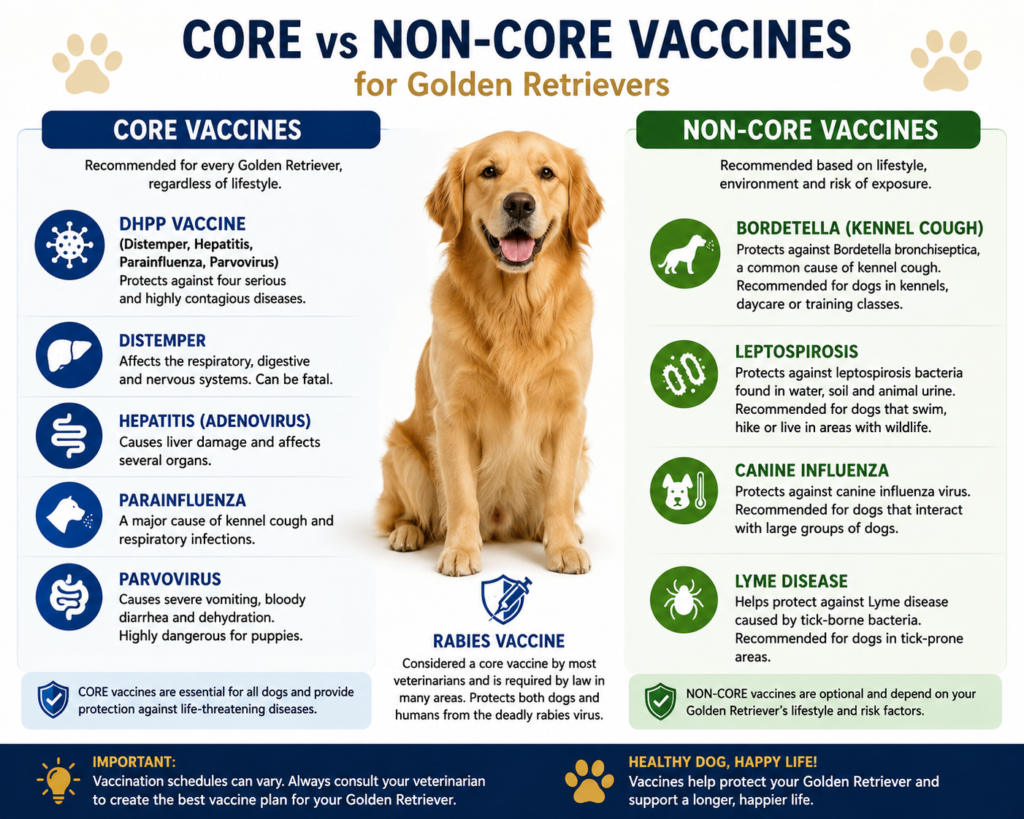
Core vs Non-Core Vaccines
Understanding the difference between core and non-core vaccines is an important part of every Golden Retriever Vaccination Guide.
What Are Core Vaccines? What do they protect against?
Core vaccines are recommended for every Golden Retriever Vaccination, regardless of where they live.
These include:
DHPP Vaccine
This combination vaccine protects against:
- Distemper
- Hepatitis (Adenovirus)
- Parainfluenza
- Parvovirus
It is considered one of the most important vaccines for puppies.
Rabies Vaccine
Rabies affects the nervous system and is almost always fatal once symptoms appear.
Because rabies can also infect humans, vaccination is legally required in many areas.
What Are Non-Core Vaccines?
Non-core vaccines are recommended based on your dog’s lifestyle, environment, and risk factors.
Examples include:
Bordetella Vaccine
Protects against kennel cough.
Recommended for dogs that:
- Visit boarding kennels
- Attend daycare
- Participate in training classes
- Frequently visit dog parks
Leptospirosis Vaccine
Recommended for dogs living in areas with standing water, wildlife, or farm animals.
Golden Retrievers that enjoy hiking or swimming often benefit from this vaccine.
Canine Influenza Vaccine
Helpful for dogs that regularly interact with large groups of dogs.
Lyme Disease Vaccine
Recommended in areas where ticks are common.
Your veterinarian can determine whether these optional vaccines are necessary for your Golden Retriever.

Golden Retriever Puppy Vaccination Schedule
One of the most common questions new owners ask is, “When should my puppy receive vaccines?”
The exact schedule may vary slightly depending on your veterinarian, but the following timeline is widely recommended.
| Puppy Age | Recommended Vaccines |
|---|---|
| 6–8 Weeks | First DHPP vaccine |
| 9–11 Weeks | Second DHPP, optional Bordetella |
| 12 Weeks | DHPP booster, Leptospirosis (if needed) |
| 14–16 Weeks | Final DHPP, Rabies vaccine |
| 12 Months | Booster vaccinations |
Receiving every dose on time is important because missing a booster can leave gaps in your puppy’s immunity.
First Vet Visit for Golden Retriever Vaccination
Your Golden Retriever puppy should visit a veterinarian within the first few days after coming home.
During this appointment, the veterinarian will:
- Perform a complete physical examination
- Check body weight and growth
- Discuss nutrition
- Recommend parasite prevention
- Begin your puppy’s vaccination schedule
- Create a personalized health record
Do not delay this first visit, even if the breeder has already given the first vaccine.
Preparing Your Puppy for Vaccination
A little preparation can make vaccination day much less stressful.
Before visiting the veterinarian:
- Bring previous vaccination records.
- Avoid introducing your puppy to unknown dogs until vaccinations are complete.
- Keep your puppy hydrated.
- Feed a light meal unless instructed otherwise.
- Stay calm to help reduce your puppy’s anxiety.
- Reward your puppy with praise and treats after the visit.
Positive experiences at the veterinary clinic help build confidence for future appointments.
Adult Golden Retriever Vaccination Schedule
Many owners think Golden Retriever vaccinations are only necessary during puppyhood. However, following a proper Golden Retriever Vaccination Guide means keeping up with vaccinations throughout your dog’s entire life. Immunity from some vaccines decreases over time, making booster shots essential for continued protection.
After your Golden Retriever turns one year old, your veterinarian will recommend a vaccination schedule based on your dog’s age, lifestyle, travel habits, and local disease risks.
Typical Adult Golden Retriever Vaccination Schedule
| Dog’s Age | Recommended Vaccines |
|---|---|
| 1 Year | DHPP Booster, Rabies Booster, Leptospirosis (if needed), Bordetella |
| Every 1–3 Years | DHPP (as recommended by your vet) |
| Every 1–3 Years | Rabies (depending on local laws and vaccine type) |
| Every Year | Bordetella (for social dogs) |
| Every Year | Canine Influenza (high-risk dogs) |
| Every Year | Lyme Disease (if living in tick-prone areas) |
Some vaccines protect for three years, while others require annual boosters. Your veterinarian will determine the safest schedule for your Golden Retriever.
Rabies Vaccine Explained
The rabies vaccine is one of the most important vaccines included in every Golden Retriever Vaccination Guide.
Rabies is a deadly viral disease that attacks the brain and nervous system. Once symptoms appear, there is no effective treatment, and the disease is almost always fatal. Because rabies can also spread to humans through bites, vaccination is required by law in many countries.
When Is the Rabies Vaccine Given?
Most Golden Retriever puppies receive their first rabies vaccine between 14 and 16 weeks of age. A booster is usually given at one year, followed by additional boosters every one to three years, depending on local regulations and the vaccine used.
Even if your dog spends most of its time indoors, rabies vaccination is still essential because unexpected contact with wild animals or stray dogs can occur.
DHPP Vaccine: The Core Protection
The DHPP vaccine protects your Golden Retriever against four serious diseases in a single injection:
Distemper
Canine distemper is a highly contagious viral disease that affects the respiratory, digestive, and nervous systems. It can cause fever, coughing, seizures, and permanent neurological damage.
Hepatitis (Adenovirus)
Canine hepatitis affects the liver, kidneys, eyes, and blood vessels. Vaccination greatly reduces the risk of severe illness.
Parainfluenza
This virus contributes to kennel cough and spreads quickly where dogs gather, such as kennels and dog parks.
Parvovirus
Parvovirus is one of the deadliest diseases for puppies. It causes severe vomiting, bloody diarrhea, dehydration, and can become fatal without immediate treatment.
Keeping your dog up to date with the DHPP vaccine is a cornerstone of a complete Golden Retriever Vaccination Guide.
Non-Core Vaccines: Does Your Golden Retriever Need Them?
Not every Golden Retriever needs every vaccine. Some vaccinations are recommended only for dogs with specific lifestyles or environmental risks.
Bordetella (Kennel Cough)
Bordetella is highly contagious and spreads wherever dogs are in close contact.
Your Golden Retriever should receive this vaccine if they:
- Visit dog parks regularly
- Attend obedience classes
- Stay at boarding facilities
- Go to grooming salons frequently
- Participate in dog shows
The vaccine may be given as a nasal spray, oral vaccine, or injection.
Leptospirosis Vaccine
Golden Retrievers are active dogs that often enjoy swimming, hiking, and outdoor adventures. These activities can increase the risk of leptospirosis.
Leptospirosis spreads through water or soil contaminated with the urine of infected animals such as rodents, raccoons, or livestock.
Symptoms include:
- Fever
- Vomiting
- Loss of appetite
- Kidney disease
- Liver damage
Because the disease can also infect humans, veterinarians often recommend this vaccine for active Golden Retrievers.
Canine Influenza Vaccine
Canine influenza, also known as dog flu, spreads quickly among dogs in crowded environments.
Your veterinarian may recommend this vaccine if your Golden Retriever:
- Travels frequently
- Attends daycare
- Competes in dog sports
- Lives in an area experiencing outbreaks
Lyme Disease Vaccine
If you live in a region where ticks are common, your Golden Retriever may benefit from the Lyme disease vaccine.
Tick prevention should still be used even after vaccination because ticks can transmit several other diseases.
Booster Shots: Why They Matter in Golden Retriever Vaccination
Many owners mistakenly believe that one round of puppy vaccines provides lifelong protection. In reality, immunity can decrease over time.
Booster shots help your dog’s immune system “remember” harmful viruses and bacteria, ensuring continued protection.
Skipping boosters may leave your Golden Retriever vulnerable to diseases they were previously protected against.
To stay on track:
- Keep a vaccination record.
- Schedule annual wellness exams.
- Set reminders for upcoming booster appointments.
- Follow your veterinarian’s recommendations.
A consistent booster schedule is one of the most important steps in any Golden Retriever Vaccination Guide.
Possible Vaccine Side Effects
Vaccines are very safe, and serious reactions are uncommon. However, mild side effects can occur as your dog’s immune system responds.
Mild Side Effects
These usually disappear within 24 to 48 hours:
- Mild fever
- Tiredness
- Sleepiness
- Reduced appetite
- Slight swelling at the injection site
- Mild soreness
Allow your Golden Retriever to rest, provide fresh water, and avoid strenuous exercise for the rest of the day.
Rare but Serious Reactions
Although uncommon, contact your veterinarian immediately if your dog experiences:
- Difficulty breathing
- Facial swelling
- Persistent vomiting
- Severe diarrhea
- Collapse
- Pale gums
- Hives
- Extreme weakness
These symptoms require urgent veterinary care.
When Should You Delay Vaccination?
Sometimes it is safer to postpone a vaccine until your dog is healthy.
Your veterinarian may recommend delaying vaccination if your Golden Retriever:
- Has a fever
- Is recovering from surgery
- Is severely stressed
- Has an active infection
- Is receiving medications that suppress the immune system
- Has experienced a serious vaccine reaction in the past
Always discuss your dog’s medical history with your veterinarian before vaccination.

How Much Do Golden Retriever Vaccinations Cost?
The cost of vaccinations depends on your location, veterinary clinic, and the vaccines required.
On average:
| Vaccine | Estimated Cost (USD) |
|---|---|
| DHPP | $20–$50 |
| Rabies | $15–$35 |
| Bordetella | $20–$45 |
| Leptospirosis | $20–$40 |
| Lyme Disease | $30–$50 |
| Canine Influenza | $30–$60 |
Many veterinary clinics also offer puppy wellness packages that include vaccinations, deworming, and health checkups at a lower overall cost.
Tips for Caring for Your Golden Retriever After Vaccination
Proper aftercare helps your dog recover comfortably after receiving vaccines.
Provide Plenty of Water
Fresh water helps keep your dog hydrated and supports overall recovery.
Let Your Dog Rest
Avoid long walks, running, or vigorous play for the remainder of the day.
Offer a Normal Meal
Most Golden Retrievers can eat their regular food after vaccination. If your dog has a slightly reduced appetite, offer a smaller meal and monitor them.
Observe Your Dog
Keep an eye on your Golden Retriever for the next 24–48 hours. Mild tiredness is normal, but contact your veterinarian if symptoms become severe or last longer than expected.
Avoid Stress
Give your dog a quiet, comfortable place to relax and recover.
Common Golden Retriever Vaccination Mistakes to Avoid
Even responsible dog owners can make mistakes when it comes to vaccinations. Following a complete Golden Retriever Vaccination Guide means understanding not only which vaccines your dog needs but also how to avoid common errors that could reduce their effectiveness.
1. Skipping Booster Shots
One of the biggest mistakes is assuming that puppy vaccines provide lifelong immunity. While the initial vaccine series builds protection, booster shots are essential to maintain it. Missing boosters can leave your Golden Retriever vulnerable to diseases like parvovirus, distemper, and rabies.
Always follow the schedule recommended by your veterinarian and keep a record of every vaccination.
2. Taking Your Puppy to Public Places Too Early
Golden Retriever puppies are naturally curious and social, but they should not visit dog parks, pet stores, or other public areas where unvaccinated dogs may have been until they have completed their initial vaccination series.
Avoid exposing your puppy to:
- Dog parks
- Boarding kennels
- Grooming salons
- Dog daycare centers
- Busy walking trails with many dogs
Socialization is important, but it should be done safely with healthy, vaccinated dogs.
3. Ignoring Vaccination Records
Keeping a detailed golden retriever vaccination record helps you stay on schedule and provides proof of vaccination when needed.
Many boarding facilities, grooming salons, training classes, and dog daycare centers require up-to-date vaccination records before accepting your dog.
Store both a printed and digital copy in a safe place.
4. Vaccinating a Sick Dog
If your Golden Retriever is ill, has a fever, or is recovering from surgery, vaccinations may need to be postponed.
Vaccines work best when your dog’s immune system is healthy. Always inform your veterinarian if your dog has been unwell before a scheduled vaccination appointment.
5. Missing Annual Wellness Exams
Vaccination appointments are also an opportunity for your veterinarian to monitor your Golden Retriever’s overall health.
During these visits, your vet can:
- Check weight and body condition
- Listen to the heart and lungs
- Examine the teeth, ears, and eyes
- Detect health problems early
- Recommend parasite prevention
These regular checkups are just as important as the vaccines themselves.
Vaccination Myths vs. Facts
There is a lot of misinformation online about dog vaccines. Understanding the facts will help you make informed decisions for your Golden Retriever.
| Myth | Fact |
|---|---|
| Indoor dogs don’t need vaccines. | Even indoor dogs can be exposed to diseases through people, other pets, or unexpected encounters with wildlife. |
| One round of puppy shots lasts for life. | Booster vaccinations are necessary to maintain immunity. |
| Vaccines always make dogs sick. | Most dogs experience little or no side effects. Mild tiredness or soreness is normal for a short time. |
| Healthy dogs don’t need vaccinations. | Vaccines are designed to prevent illness before it occurs. |
| Vaccines are more dangerous than diseases. | Serious vaccine reactions are rare, while diseases like parvovirus and rabies can be fatal. |
Annual Golden Retriever Vaccination Checklist
Use this checklist each year to help keep your Golden Retriever protected.
✔ Schedule an Annual Veterinary Checkup
A yearly examination helps your veterinarian determine which vaccines are due and assess your dog’s overall health.
✔ Review Vaccination Records
Check when the last vaccines were administered and confirm whether any boosters are needed.
✔ Discuss Lifestyle Changes
If your Golden Retriever has started hiking, swimming, traveling, attending daycare, or visiting dog parks more often, additional vaccines may be recommended.
✔ Stay Current on Parasite Prevention
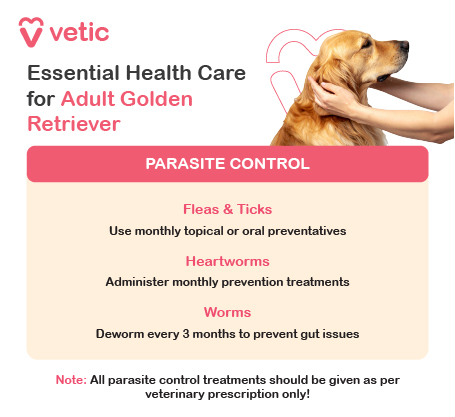
Vaccines protect against infectious diseases, but they do not prevent fleas, ticks, heartworms, or intestinal parasites. Keep your dog on a veterinarian-approved prevention plan.
✔ Monitor Your Dog After Vaccination
Observe your Golden Retriever for the next 24 to 48 hours. Mild tiredness is normal, but contact your veterinarian if you notice severe swelling, difficulty breathing, or persistent vomiting.
Frequently Asked Questions (FAQs)
1. At what age should a Golden Retriever puppy get its first vaccine?
Most Golden Retriever puppies receive their first DHPP vaccine between 6 and 8 weeks of age. Your veterinarian will create a schedule based on your puppy’s health and previous vaccinations.
2. How many vaccines does a Golden Retriever puppy need?
Most puppies receive a series of three to four DHPP vaccinations, along with a rabies vaccine and any recommended non-core vaccines based on their lifestyle and environment.
3. Is the rabies vaccine mandatory?
In many countries and regions, rabies vaccination is required by law. Even where it is not legally required, veterinarians strongly recommend it because rabies is fatal and can spread to humans.
4. Can I walk my puppy before all vaccinations are complete?
You can carry your puppy outdoors or allow them to explore safe, clean areas at home. However, avoid public places where unvaccinated dogs may have been until your veterinarian confirms that your puppy is fully protected.
5. How often does an adult Golden Retriever need booster shots?
The frequency depends on the vaccine. Some boosters are given every year, while others protect for up to three years. Your veterinarian will recommend the appropriate schedule.
6. What should I do if I miss a vaccine appointment?
Contact your veterinarian as soon as possible. In some cases, your dog can continue the schedule without restarting the entire series, but this depends on how much time has passed.
7. Are vaccine side effects normal?
Yes. Mild tiredness, soreness at the injection site, or a slight decrease in appetite for 24 to 48 hours is common. Serious reactions are rare but require immediate veterinary attention.
8. Can older Golden Retrievers still receive vaccines?
Yes. Senior Golden Retrievers often continue to need vaccinations, although the schedule may be adjusted based on their age, health, and lifestyle.
9. Do indoor Golden Retrievers need vaccinations?
Absolutely. Even indoor dogs can be exposed to infectious diseases through visitors, other pets, wildlife, or trips to the veterinarian or groomer.
10. Can vaccinations prevent every disease?
No vaccine offers 100% protection, but following a proper Golden Retriever Vaccination Guide greatly reduces the risk of serious illness and often lessens the severity of disease if exposure occurs.
Final Thoughts
Keeping your Golden Retriever healthy begins with prevention, and vaccinations are one of the most effective ways to protect your dog from life-threatening diseases. By following a reliable Golden Retriever Vaccination Guide, you can ensure your puppy receives the right vaccines at the right time and continues to stay protected with regular booster shots throughout adulthood.
Remember that vaccinations are only one part of a complete healthcare routine. Annual veterinary checkups, a balanced diet, regular exercise, parasite prevention, and proper grooming all contribute to your Golden Retriever’s long-term health and happiness.
Work closely with your veterinarian to create a vaccination plan tailored to your dog’s age, lifestyle, and local disease risks. Staying consistent with your dog’s healthcare today can help provide many years of companionship and a healthier, more active life.

Leave a Reply