
Golden Retriever Training
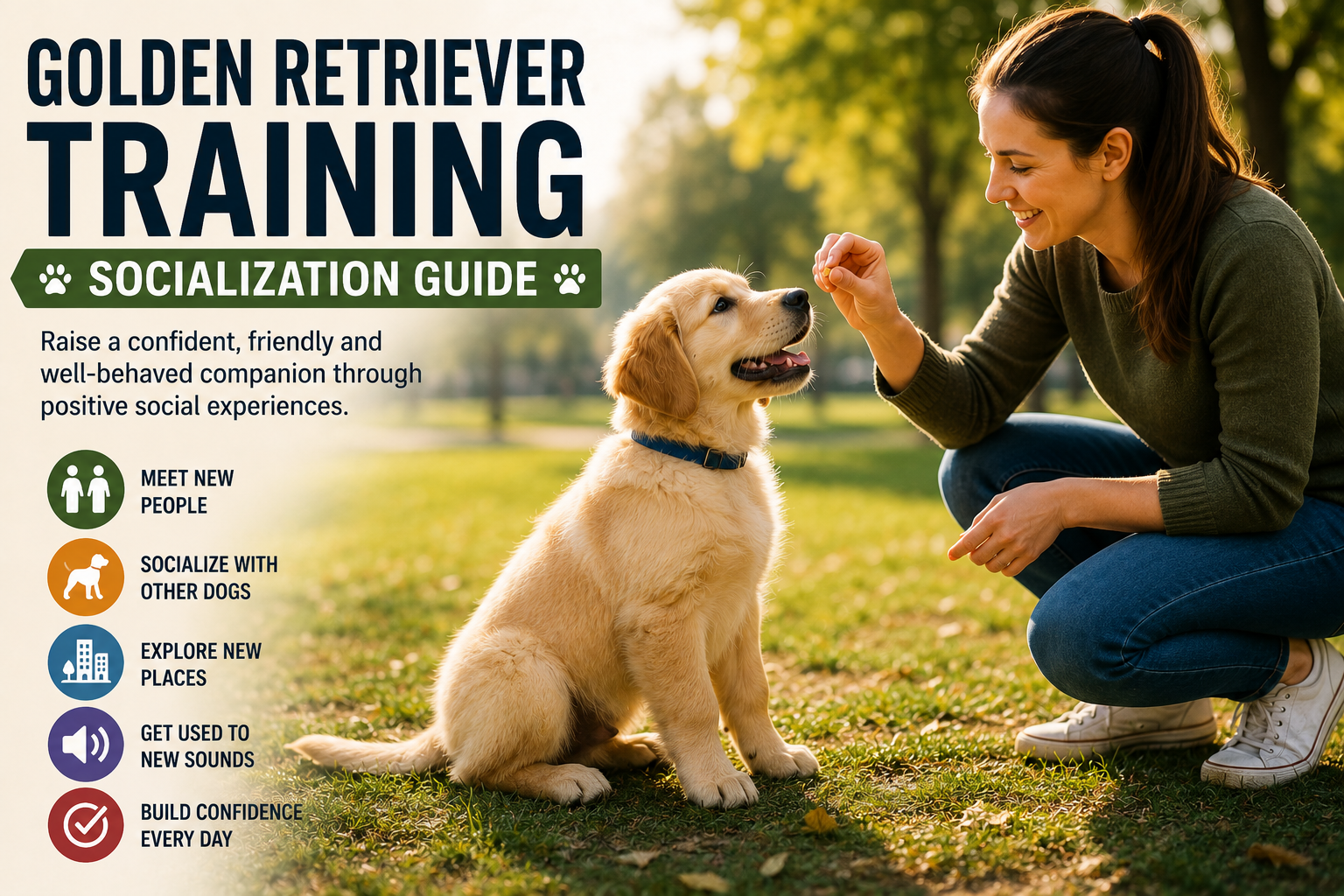
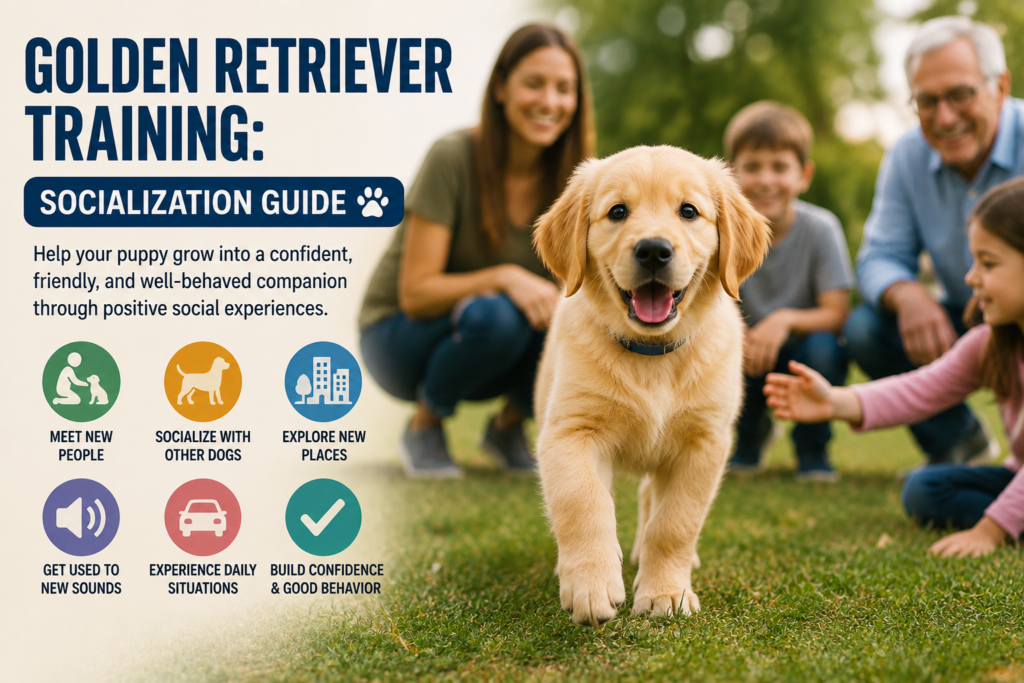
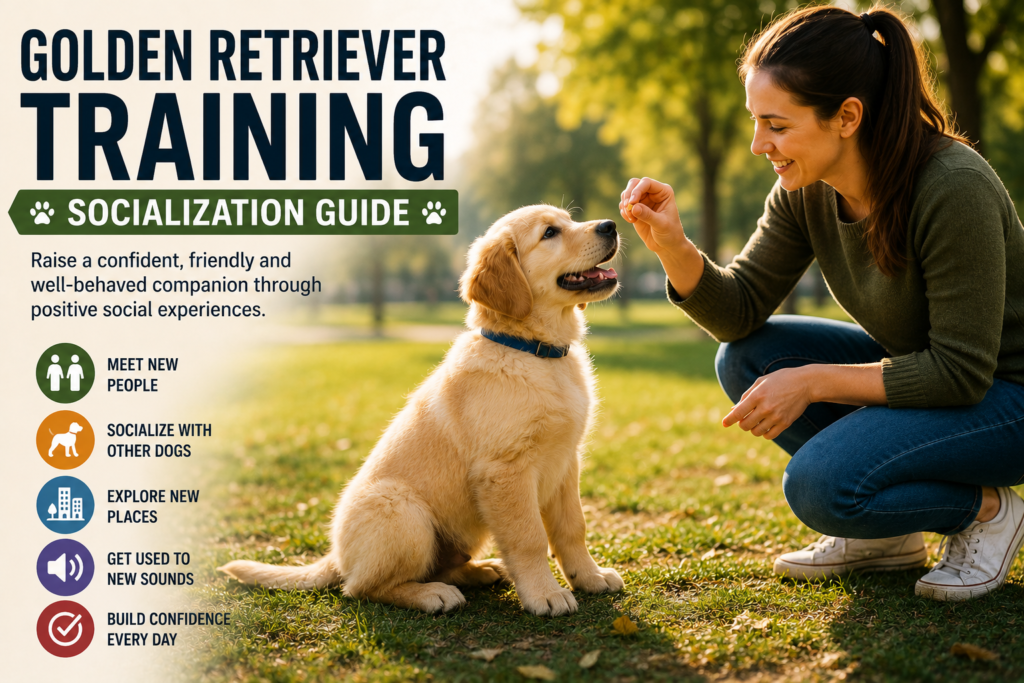
Golden Retriever Training: Socialization Guide is one of the most important steps in raising a happy, confident, and well-behaved dog. Bringing home a Golden Retriever puppy is an exciting experience. These dogs are known for being friendly, loving, and easy to train. However, even the sweetest puppy needs proper socialization to grow into a confident and well-behaved adult dog. Socialization is one of the most important parts of Golden Retriever training because it helps your puppy feel comfortable around people, animals, places, sounds, and new situations.
Many owners believe being social means letting their puppy meet other dogs. In reality, it is much more than that. A well-socialized Golden Retriever learns how to stay calm, friendly, and confident in different environments. This reduces the chances of fear, anxiety, excessive barking, aggression, or other unwanted behaviors later in life.
Whether you are raising your first Golden Retriever or adding another puppy to your family, this guide will help you understand everything you need to know about socialization. You will learn the right age to start, simple training methods, common mistakes to avoid, and practical tips that make socialization fun and safe.
By the end of this guide, you will have a clear plan to help your Golden Retriever become a happy, confident, and well-mannered companion.
Table of Contents
- What Is Puppy Socialiization?
- Why Is Socialization Important for Golden Retrievers?
- The Best Age to Socialize a Golden Retriever Puppy
- How to Socialize a Puppy
- 5 Tips for Socializing Your Puppy
- Socializing Your Puppy with People
- Socializing with Other Dogs
- Introducing Other Animals
- Visiting New Places
- Getting Used to Everyday Sounds
- Building Confidence Through Positive Experiences
- Common Socialization Mistakes
- Weekly Socialization Checklist
- Signs Your Puppy Needs More Socialization
- Frequently Asked Questions
- Final Thoughts
What Is Puppy Socialization?
Socialization is the process of introducing your puppy to different people, animals, places, sounds, objects, and experiences in a safe and positive way. It teaches your puppy that the world is not something to fear.
A socialized Golden Retriever is comfortable when meeting strangers, playing with other dogs, riding in a car, visiting the veterinarian, hearing loud noises, or walking in busy areas.
Without proper socialization, even a naturally friendly breed like the Golden Retriever can become nervous, shy, or fearful in unfamiliar situations.
Think of socialization as building your puppy’s confidence one experience at a time.
Why Is Socialization Important for Golden Retrievers?
Golden Retrievers are naturally friendly dogs, but they are not born knowing how to behave in every situation. Their early experiences shape their personality for the rest of their lives.
Good socialization helps your puppy:
- Become confident around new people.
- Stay calm in busy environments.
- Reduce fear and anxiety.
- Prevent aggressive behavior caused by fear.
- Improve obedience training.
- Enjoy traveling and outdoor activities.
- Adapt to new experiences more easily.
- Build trust with family members.
A puppy that has positive experiences early in life is much more likely to grow into a relaxed and happy adult dog.
Benefits of Early Socialization
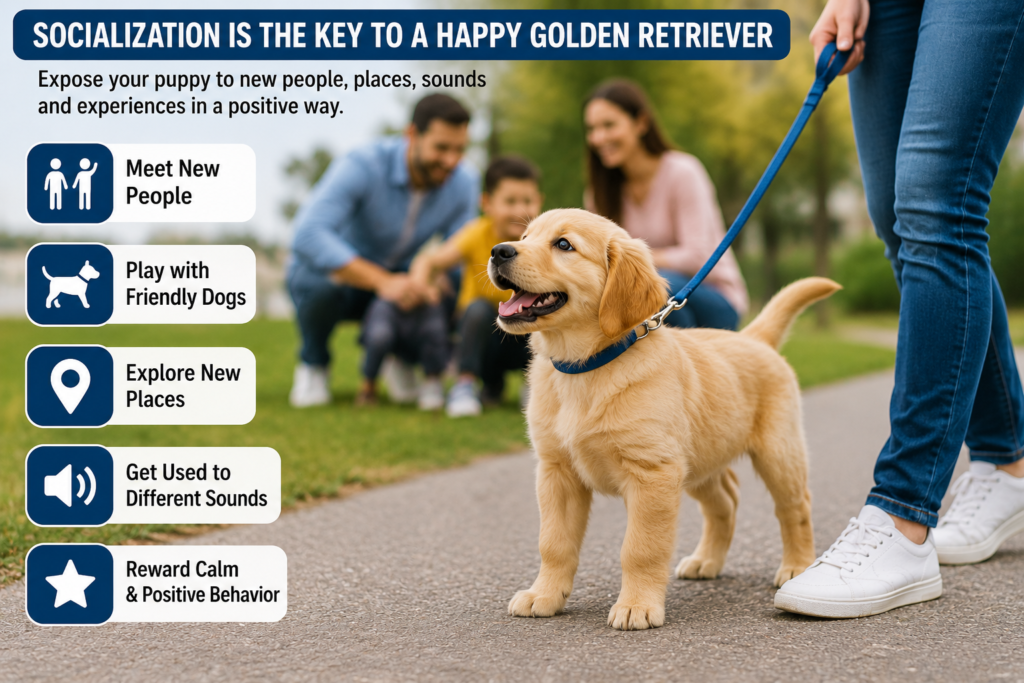
Early socialization provides lifelong benefits.
Better Behavior
A well-socialized Golden Retriever is less likely to bark excessively, jump on visitors, or become frightened by everyday situations.
Easier Training
Confident puppies focus better during training sessions because they are not distracted by fear or stress.
Better Health
Stress can affect a dog’s overall health. Puppies that feel safe and confident often experience less anxiety.
Stronger Bond
Positive experiences shared with your puppy help build trust between you and your dog.
The Best Age to Socialize a Golden Retriever Puppy
The ideal socialization period is between 3 and 16 weeks of age.
During this time, puppies are naturally curious and willing to accept new experiences.
That does not mean older dogs cannot learn. Adult Golden Retrievers can still be socialized, but it usually takes more patience and consistent training.
Socialization Timeline
| Puppy Age | Focus |
|---|---|
| 3–8 weeks | Learning from mother and littermates |
| 8–12 weeks | Meeting family members and gentle visitors |
| 12–16 weeks | New places, sounds, friendly dogs, short trips |
| 4–6 months | Building confidence in different environments |
| 6 months+ | Continuing social experiences and obedience training |
The earlier you start, the easier socialization becomes.
Signs Your Puppy Is Ready
Your Golden Retriever puppy is ready to begin socialization when they:
- Show curiosity instead of fear.
- Enjoy treats and toys.
- Recover quickly after being startled.
- Follow you with confidence.
- Respond positively to gentle handling.
Always introduce new experiences slowly.
How to Socialize a Puppy
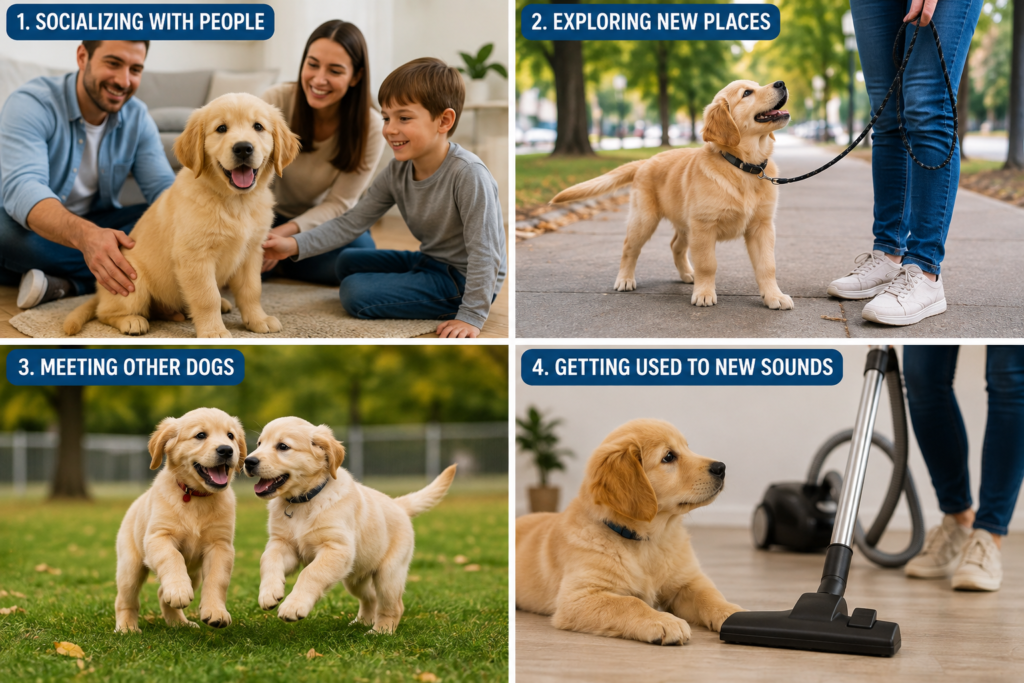
Many new owners ask how to socialize a Puppy correctly. The answer is simple—introduce your puppy to new experiences gradually while making every experience positive.
Here are the basic steps.
Start at Home
Home is where your puppy feels safest.
Allow them to explore different rooms, surfaces, toys, and household sounds.
Let them walk on:
- Carpet
- Hardwood floors
- Grass
- Sand
- Tiles
- Gravel
Different textures build confidence.
Meet Different People
Introduce your puppy to people of different:
- Ages
- Heights
- Voices
- Clothing styles
- Hair styles
For example, let them meet:
- Children
- Elderly people
- Men
- Women
- People wearing hats
- People with umbrellas
- People carrying bags
Reward calm behavior with treats.
Explore New Places
Take short trips to different locations.
Examples include:
- Quiet parks
- Pet-friendly stores
- Neighborhood sidewalks
- Outdoor cafés
- Friends’ homes
Avoid crowded places until your puppy has received the necessary vaccinations recommended by your veterinarian.
Meet Friendly Dogs
Only allow your puppy to meet vaccinated and well-behaved dogs.
Positive dog-to-dog interactions teach valuable communication skills.
Never force two dogs to interact.
Introduce Everyday Sounds
Many puppies become frightened by unfamiliar noises.
Play sounds at a low volume first.
Examples include:
- Vacuum cleaners
- Hair dryers
- Thunder recordings
- Fireworks recordings
- Doorbells
- Washing machines
- Traffic
Reward relaxed behavior with praise and treats.
Socializing Through Play
Play is one of the easiest ways to build confidence.
Games like:
- Fetch
- Tug
- Hide and seek
- Find the treat
- Puzzle toys
Help your puppy learn while having fun.
Short play sessions also improve your bond.
Positive Reinforcement Is the Key
Golden Retrievers respond best to positive reinforcement.
Whenever your puppy behaves calmly during a new experience, reward them immediately.
Rewards may include:
- Small treats
- Praise
- Petting
- Favorite toys
Avoid yelling or punishment if your puppy becomes scared.
Instead, move farther away from the scary situation and try again later.
Remember:
Confidence grows through positive experiences—not force.
How Long Should Socialization Sessions Be?
Keep sessions short.
A good goal is:
- 5–10 minutes for young puppies.
- 10–20 minutes for older puppies.
- Several short sessions each day.
Short sessions prevent your puppy from becoming overwhelmed.
Socialization Goals During the First Month
By the end of your puppy’s first month at home, they should have experienced:
- Different family members
- Friendly visitors
- Household sounds
- Gentle handling
- Different walking surfaces
- Car rides
- New toys
- Basic grooming
- Friendly dogs
- New outdoor environments
Every positive experience builds confidence.
5 Tips for Socializing Your Puppy
Socializing your Golden Retriever puppy does not have to be difficult. The goal is to help your puppy enjoy new experiences without feeling scared or overwhelmed. Here are 5 Tips for Socializing Your Puppy that every owner should follow.
Start Early
The earlier you begin socialization, the easier it is for your puppy to learn. Puppies between 8 and 16 weeks old are usually the most curious and open to new experiences. During this stage, introduce your puppy to different people, places, sounds, and objects in a calm and positive way.
Keep Every Experience Positive
Your puppy should associate new experiences with something enjoyable. Offer praise, treats, or a favorite toy whenever they stay calm or show curiosity.
If your puppy seems frightened, do not force the interaction. Instead, move farther away, let them relax, and try again later.
Introduce One New Thing at a Time
Too many new experiences in one day can overwhelm your puppy.
For example, instead of visiting a crowded park and meeting many dogs at once, start with a quiet walk where your puppy can observe people and dogs from a distance. Gradually increase the level of activity as their confidence grows.
Practice Regularly
Socialization is not a one-time event. Continue exposing your Golden Retriever to different situations as they grow.
Aim for several short socialization sessions each week. Regular practice helps your puppy stay confident and adaptable throughout life.
Stay Calm and Patient
Dogs can sense your emotions. If you remain relaxed and confident, your puppy is more likely to feel safe.
Celebrate small successes and avoid rushing the process. Every puppy learns at their own pace.
Socializing Your Golden Retriever with People
Golden Retrievers are naturally friendly, but they still need to learn how to behave around different kinds of people.
Introduce your puppy to:
- Adults
- Children
- Elderly people
- Men and women
- People wearing hats
- People with glasses
- People carrying umbrellas or backpacks
- Delivery workers
- Visitors at your home
Ask people to approach calmly and allow your puppy to come to them. Reward your puppy for remaining relaxed and polite.
Never let strangers overwhelm your puppy with too much attention.
Teaching Good Manners Around Guests
Many Golden Retriever puppies become excited when visitors arrive. While this excitement is normal, it is important to teach polite behavior from the beginning.
When guests visit:
- Ask your puppy to sit before greeting.
- Reward calm behavior.
- Ignore jumping until all four paws are on the ground.
- Keep greetings short and relaxed.
- Ask visitors not to encourage jumping.
Consistency will help your puppy develop good habits.
Socializing with Children
Golden Retrievers usually get along very well with children, but both the puppy and the child need guidance.
Teach children to:
- Pet gently.
- Avoid pulling ears or tails.
- Never disturb a puppy while eating or sleeping.
- Speak softly.
- Play calmly.
Always supervise interactions between young children and puppies.
Positive experiences with children help build trust and prevent fear later in life.
Socializing with Other Dogs
Meeting other dogs is one of the most important parts of socialization.
Choose calm, friendly, and vaccinated dogs for your puppy’s first introductions.
Good places include:
- Puppy training classes
- Friends’ homes
- Controlled playdates
- Secure dog parks (after vaccinations and when your puppy is ready)
Allow dogs to sniff each other naturally. Keep the leash loose and avoid pulling unless necessary.
If either dog seems uncomfortable, calmly separate them and try another time.
Reading Dog Body Language
Learning your puppy’s body language helps you know when they are comfortable or stressed.
Signs Your Puppy Is Comfortable
- Relaxed body
- Wagging tail
- Soft eyes
- Curious behavior
- Play bow
- Approaching willingly
Signs Your Puppy Is Nervous
- Tail tucked
- Flattened ears
- Hiding behind you
- Excessive panting
- Trembling
- Trying to escape
- Growling or barking from fear
If you notice signs of stress, end the interaction and allow your puppy to recover.
Introducing Other Animals
Many Golden Retrievers live with other pets such as cats, rabbits, or birds.
Introduce animals slowly.
Some helpful tips include:
- Keep initial meetings short.
- Use a leash if necessary.
- Reward calm behavior.
- Give each animal its own safe space.
- Never force interaction.
Over time, many Golden Retrievers learn to live peacefully with other household pets.
Visiting New Places
A confident dog should feel comfortable in different environments.
Take your puppy to a variety of safe places, including:
- Parks
- Quiet streets
- Pet-friendly stores
- Outdoor cafés
- Friends’ houses
- Veterinary clinic parking areas
- Grooming salons
- Walking trails
Every visit introduces new sights, sounds, and smells that help build confidence.
Car Ride Socialization
Some puppies become nervous during car rides because they only associate the car with visits to the veterinarian.
Help your puppy enjoy traveling by:
- Taking short drives.
- Offering treats after each trip.
- Using a secure dog seat belt or travel crate.
- Ending rides at fun destinations like parks.
This creates positive associations with the car.
Socializing Around Everyday Sounds
Many dogs become fearful because they were never introduced to common household noises.
Expose your puppy gradually to sounds such as:
- Vacuum cleaner
- Hair dryer
- Doorbell
- Washing machine
- Blender
- Television
- Traffic
- Thunder
- Fireworks recordings
- Lawn mower
Start with low-volume sounds and slowly increase the volume over time while rewarding calm behavior.
Helping Your Puppy Feel Comfortable During Grooming
Golden Retrievers require regular grooming throughout their lives.
Introduce grooming tools while your puppy is still young.
Practice:
- Brushing
- Nail trimming
- Ear checks
- Tooth brushing
- Bath time
- Drying with a towel
- Blow dryer (low setting)
Reward your puppy after each session to make grooming a positive experience.
Socialization During Walks
Walks provide excellent learning opportunities.
Allow your puppy to experience:
- Bicycles
- Strollers
- Joggers
- Wheelchairs
- Skateboards
- Different weather conditions
- Bridges
- Small hills
- Different walking surfaces
Keep your puppy focused on you by rewarding calm behavior whenever they notice something new.
Building Confidence Through Positive Experiences
Confidence develops slowly through many successful experiences.
Try activities such as:
- Walking over small wooden boards.
- Exploring playground equipment (when empty).
- Climbing gentle slopes.
- Walking through tunnels made from cardboard boxes.
- Playing with safe interactive toys.
- Solving simple food puzzles.
Each challenge teaches your puppy that trying new things is rewarding.
Remember: Every Puppy Is Different
Some Golden Retriever puppies are naturally outgoing, while others are more cautious.
Avoid comparing your puppy to other dogs. Progress happens at different speeds.
The goal is not to create the most social dog overnight—it is to help your puppy become confident, relaxed, and happy through consistent positive experiences.
Common Socialization Mistakes to Avoid
Even with the best intentions, many new Golden Retriever owners make mistakes during socialization. Avoiding these common errors will help your puppy grow into a confident and friendly adult.
1. Waiting Too Long to Start
One of the biggest mistakes is delaying socialization until your puppy is older. The first few months of life are the most important for learning about the world.
Start introducing your puppy to safe, new experiences as soon as your veterinarian says it is appropriate.
2. Forcing Your Puppy into Scary Situations
Never force your Golden Retriever to meet someone or approach something they are afraid of.
Forcing interactions can increase fear and damage your puppy’s confidence.
Instead:
- Stay calm.
- Give your puppy space.
- Let them approach at their own pace.
- Reward every small step forward.
3. Skipping Socialization After Puppyhood
Many owners stop socializing their dog after the first few months.
Socialization should continue throughout your dog’s life. Regular walks, meeting new people, visiting new places, and positive experiences help maintain confidence.
4. Only Socializing with Dogs
Meeting other dogs is important, but puppies also need to experience different people, places, sounds, vehicles, and everyday situations.
A well-rounded Golden Retriever is comfortable in many environments, not just at the dog park.
5. Using Punishment
If your puppy barks because they are frightened, yelling or punishing them will only make the situation worse.
Instead, reward calm behavior and gradually introduce the scary situation from a safe distance.
Positive reinforcement builds trust and confidence.
A Weekly Socialization Plan
Having a simple routine makes it easier to expose your puppy to different experiences.
| Day | Activity |
|---|---|
| Monday | Meet one new person and practice basic commands. |
| Tuesday | Take a short walk in a quiet neighborhood. |
| Wednesday | Visit a pet-friendly store or a friend’s house. |
| Thursday | Introduce a new sound or object at home. |
| Friday | Play with a friendly, vaccinated dog. |
| Saturday | Go for a short car ride and visit a park. |
| Sunday | Practice grooming, handling, and gentle brushing. |
Remember, short and positive sessions are much better than long, stressful ones.
Socialization Checklist
By the time your Golden Retriever reaches six months of age, try to expose them to as many of these experiences as possible.
People
- Men
- Women
- Children
- Elderly people
- People wearing hats
- People wearing sunglasses
- Delivery workers
- Visitors
Animals
- Friendly dogs
- Puppies
- Cats
- Farm animals (if possible)
- Birds
Places
- Parks
- Sidewalks
- Busy streets
- Pet stores
- Veterinary clinic
- Grooming salon
- Outdoor cafés
- Different neighborhoods
Sounds
- Vacuum cleaner
- Doorbell
- Thunder
- Fireworks recordings
- Traffic
- Motorcycles
- Lawn mower
- Hair dryer
Objects
- Umbrellas
- Wheelchairs
- Strollers
- Bicycles
- Skateboards
- Shopping carts
- Garbage bins
- Garden tools
Signs Your Golden Retriever Needs More Socialization
Not every puppy develops confidence at the same pace. Watch for signs that your puppy may need more positive social experiences.
These signs include:
- Hiding behind you around strangers.
- Barking excessively at new people.
- Fear of everyday sounds.
- Avoiding other dogs.
- Pulling away during walks.
- Nervous body language.
- Refusing treats in new places.
- Shaking or trembling.
If you notice these behaviors, slow down and continue socialization with patience and positive reinforcement.
Frequently Asked Questions
Can Golden Retrievers be left alone for 8 hours?
Adult Golden Retrievers may be able to stay alone for 6 to 8 hours occasionally, but they should not be left alone every day for that long. They are social dogs that enjoy human companionship and can become bored or anxious if left alone too often.
Puppies should never be left alone for eight hours because they need frequent bathroom breaks, meals, exercise, and attention. If you work long hours, consider asking a family member, friend, or dog walker to check on your puppy.
Do Golden Retrievers only bond with one person?
No. Golden Retrievers usually form strong relationships with the entire family. They are known for being affectionate and friendly with many people.
However, they may spend more time with the person who feeds, trains, exercises, and plays with them the most. This does not mean they love other family members any less.
Do Golden Retrievers choose a favorite person?
Yes, many Golden Retrievers naturally develop a favorite person.
This is usually the individual who spends the most quality time with them, provides positive training, and meets their daily needs. Even if they have a favorite person, Golden Retrievers are generally loving and loyal to the whole family.
Are boy or girl Golden Retrievers nicer?
Both male and female Golden Retrievers are wonderful companions. Personality depends more on training, socialization, and individual temperament than gender.
- Male Golden Retrievers are often playful, affectionate, and sometimes a little slower to mature.
- Female Golden Retrievers may be slightly more independent and calm as adults.
With proper training and socialization, both males and females make excellent family pets.
How often should I socialize my puppy?
Try to provide your puppy with new, positive experiences several times each week.
Even a short 10–15 minute outing can help build confidence and improve social skills.
What if my puppy is shy?
Shy puppies simply need extra patience.
Allow them to explore new situations at their own pace, reward calm behavior, and never force interactions. Confidence grows gradually through repeated positive experiences.
Can older Golden Retrievers still be socialized?
Absolutely.
While puppies learn more quickly, adult Golden Retrievers can also become more confident with consistent training, patience, and positive experiences.
The process may take longer, but it is never too late to improve your dog’s social skills.
How long does socialization take?
Socialization is an ongoing process rather than a one-time event.
Most puppies make significant progress during their first year, but regular exposure to new experiences should continue throughout adulthood.
Final Tips for Success
Before we finish, remember these simple rules:
- Start socialization as early as possible.
- Keep every experience positive.
- Reward calm and confident behavior.
- Never force your puppy into scary situations.
- Continue socialization throughout your dog’s life.
- Be patient and consistent.
- End each session on a positive note.
Small daily efforts will have a lasting impact on your Golden Retriever’s behavior.
Conclusion
Socialization is one of the greatest gifts you can give your Golden Retriever. It helps your puppy grow into a friendly, confident, and well-behaved companion who can enjoy life without unnecessary fear or anxiety.
From meeting new people and friendly dogs to exploring different places and hearing everyday sounds, every positive experience teaches your puppy an important lesson. By starting early, using positive reinforcement, and practicing regularly, you are building the foundation for a lifetime of good behavior.
Remember that every Golden Retriever learns at a different pace. Some puppies become confident quickly, while others need more time and encouragement. Stay patient, celebrate small victories, and make socialization a fun part of your daily routine.
With love, consistency, and proper training, your Golden Retriever will grow into the loyal, gentle, and confident family dog the breed is famous for.

Leave a Reply