
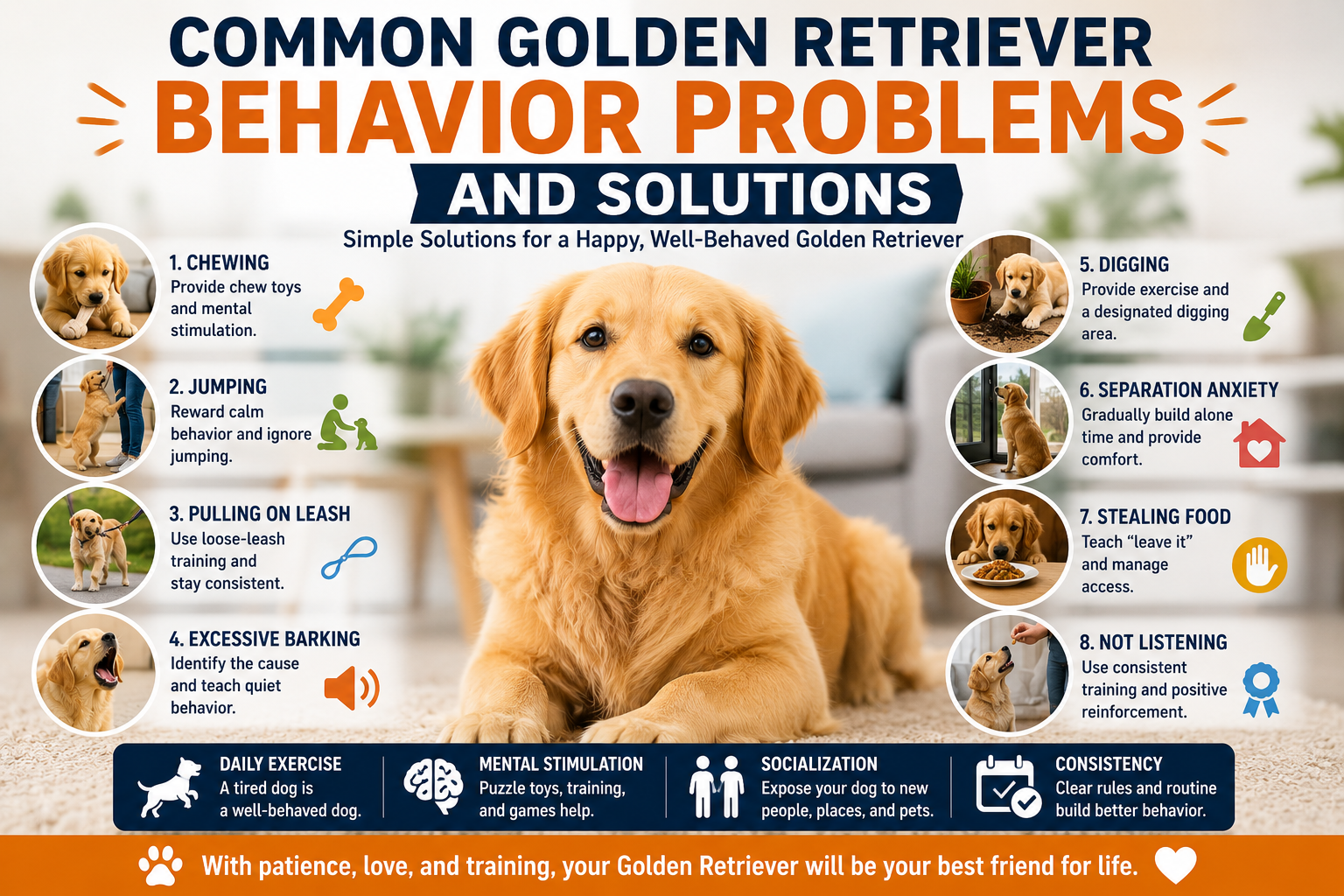

Golden Retriever Behavior Problems and Solutions
Golden Retriever Behavior Problems and Solutions: Golden Retrievers are friendly, intelligent, loving, and loyal dogs. They are known for being excellent family pets and usually enjoy spending time with people. Their gentle personality makes them popular with families, couples, and first-time dog owners.
However, every dog can develop unwanted habits. Golden Retrievers can be energetic, playful, and sometimes difficult to control, especially when they are puppies or teenagers. They may chew furniture, jump on people, bark too much, pull on the leash, dig holes, steal food, or struggle when left alone.
Understanding Golden Retriever behavior problems is important because unwanted behavior usually has a reason behind it. A puppy may chew because they are teething, while an adult dog may chew because they are bored. A dog may jump because they are excited, while another may bark because they are nervous.
The good news is that most Golden Retriever behavior problems can be improved with patience, proper training, exercise, socialization, and a consistent routine.
This guide explains the most common Golden Retriever behavior problems, why they happen, and what you can do to help your Golden Retriever become a calm, confident, and well-behaved companion.
Why Do Golden Retrievers Develop Behavior Problems?
Golden Retrievers are intelligent, but they still need to learn how to behave.
Many Golden Retriever behavior problems are connected to a lack of exercise, boredom, poor socialization, inconsistent rules, or too much unused energy.
Some common reasons include:
- Not getting enough exercise
- Lack of mental stimulation
- Poor socialization
- Inconsistent training
- Boredom
- Fear or anxiety
- Teething
- Separation from the owner
- Too much excitement
- Accidentally rewarding unwanted behavior
For example, imagine your puppy jumps on you every time you come home. If you pet the puppy while they are jumping, they may learn that jumping gets attention. If you wait until the puppy sits calmly and then give attention, they learn a better behavior.
The key is to understand what your dog is trying to communicate instead of only correcting the behavior.
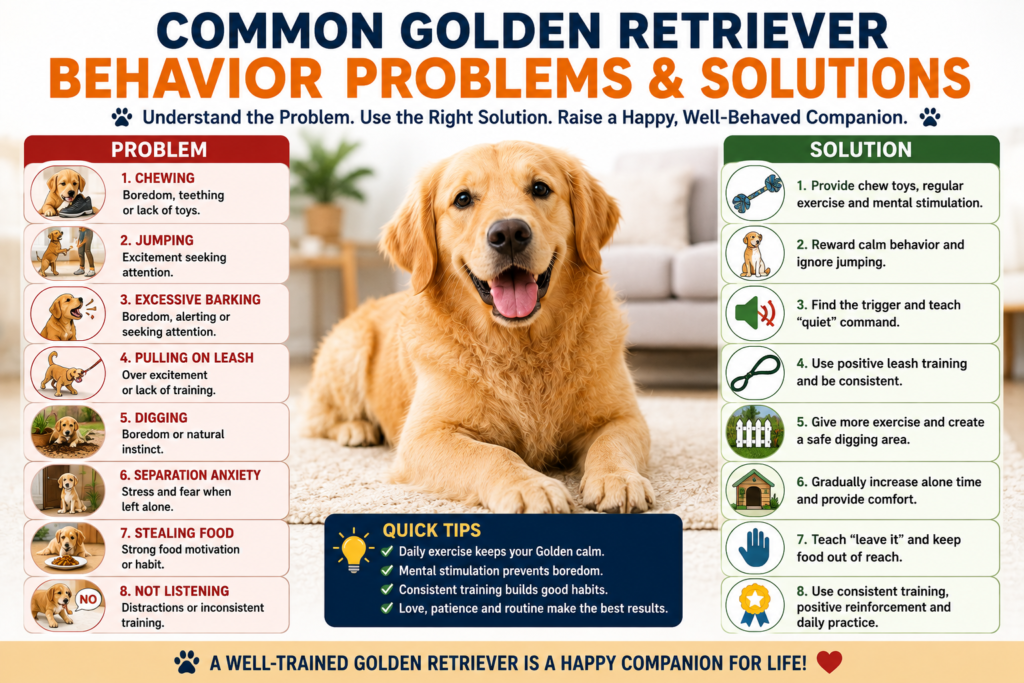
What Is the Biggest Problem with Golden Retrievers?
When people ask, “What is the biggest problem with Golden Retrievers?”, there is not one answer that applies to every dog.
One of the biggest challenges is their need for regular attention, exercise, training, proper health, and companionship.
Golden Retrievers were bred to work closely with people. They generally enjoy being involved in family activities. If they spend too much time alone or do not receive enough activity, they may become bored or frustrated.
This can lead to behaviors such as:
- Chewing
- Barking
- Digging
- Jumping
- Stealing objects
- Pulling on walks
- Excessive attention-seeking
Young Golden Retrievers can be particularly energetic. They may seem like they have endless energy during the day.
A good daily routine can help. Give your dog age-appropriate exercise, training, playtime, mental stimulation, and enough rest.
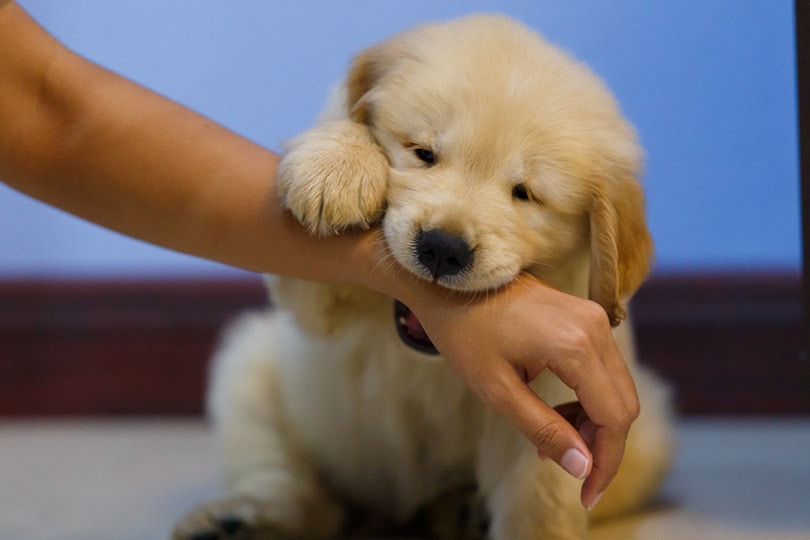
1-Puppy Biting
Puppy biting is one of the first Golden Retriever behavior problems many owners experience.
Young puppies explore the world with their mouths. They also bite while playing and may chew more during teething.
Your puppy may bite:
- Hands
- Feet
- Clothes
- Shoes
- Furniture
- Toys
Although puppy biting is normal, your dog still needs to learn that human skin should not be used as a toy.
How to Stop Puppy Biting
When your puppy bites your hand, stop the game.
Keep your hand still and calmly redirect your puppy toward an appropriate chew toy.
You can:
- Stop playing.
- Offer a chew toy.
- Praise your puppy for using the toy.
- Resume play when they are calm.
- Repeat the process consistently.
Avoid hitting, slapping, or physically punishing your puppy.
Puppies need time to learn bite control. With consistent training and maturity, most puppies become much better at controlling their mouths.
2. Excessive Barking
Barking is another common issue among Golden Retriever behavior problems.
Golden Retrievers may bark because they are excited, bored, frightened, seeking attention, or reacting to something outside.
Before trying to stop barking, find out why your dog is doing it.
Your dog may bark when:
- Someone comes to the door
- Another dog walks past
- They hear a strange noise
- They want attention
- They are bored
- They are left alone
- They see animals outside
How to Stop Excessive Barking
Do not simply shout at your dog to stop.
Your dog may think you are joining them.
Instead, identify the trigger and teach an alternative behavior.
For example, if your dog barks when someone comes to the door, teach them to go to their bed and stay there.
Reward quiet and calm behavior.
Exercise can also help when barking is caused by boredom or unused energy.
3. Jumping on People
Jumping is one of the most common Golden Retriever behavior problems, especially in young dogs.
Golden Retrievers are naturally friendly. When they see someone they love, they may become extremely excited and jump up to greet them.
A large adult Golden Retriever can easily knock over a small child or elderly person.
How to Stop Jumping
Teach your dog that calm behavior gets attention.
When your dog jumps:
- Turn away.
- Avoid pushing them.
- Do not give attention.
- Wait for all four paws to touch the ground.
- Reward calm behavior.
You can also teach your dog to sit before greeting visitors.
Everyone in your home should follow the same rule. If one person allows jumping while another person discourages it, your dog may become confused.

4. Chewing Furniture
Chewing can become one of the frustrating Golden Retriever behavior problems for new owners.
Puppies chew because they are exploring their environment and going through teething. Adult dogs may chew because they are bored, anxious, or not getting enough mental stimulation.
Your dog may chew:
- Shoes
- Furniture
- Remote controls
- Blankets
- Cushions
- Electrical wires
- Children’s toys
How to Stop Chewing
Give your dog several safe chew toys.
Keep tempting household items out of reach.
You should also provide enough exercise and mental stimulation.
If you catch your dog chewing furniture, calmly redirect them to a suitable toy. When they choose the toy, praise them.
The goal is to teach your dog what they are allowed to chew.
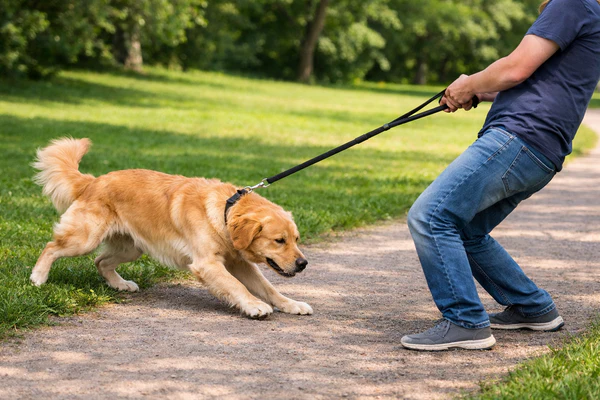
5. Pulling on the Leash
Leash pulling is another issue that can make daily walks difficult.
Golden Retrievers are curious dogs. They want to investigate smells, people, animals, and interesting objects.
A puppy may pull because everything around them is exciting.
How to Stop Leash Pulling
Start training in a quiet area.
When your dog pulls, stop walking.
Wait until the leash becomes loose. Then continue walking and reward your dog for staying near you.
Do not constantly pull your dog backward.
Instead, teach them that walking calmly allows the walk to continue.
Practice for short periods every day.
As your dog improves, slowly practice in places with more distractions.
6. Digging in the Yard
Digging is another behavior that owners may struggle with.
Some dogs dig because they are bored. Others enjoy digging naturally. A dog may also dig because they are trying to escape or searching for something interesting.
How to Stop Digging
First, find out why your dog is digging.
Give them more physical activity and mental stimulation.
You can also create a designated digging area where your dog is allowed to dig.
Reward your dog when they use the correct area.
If your dog is digging to escape, inspect the fence and remove possible escape routes.
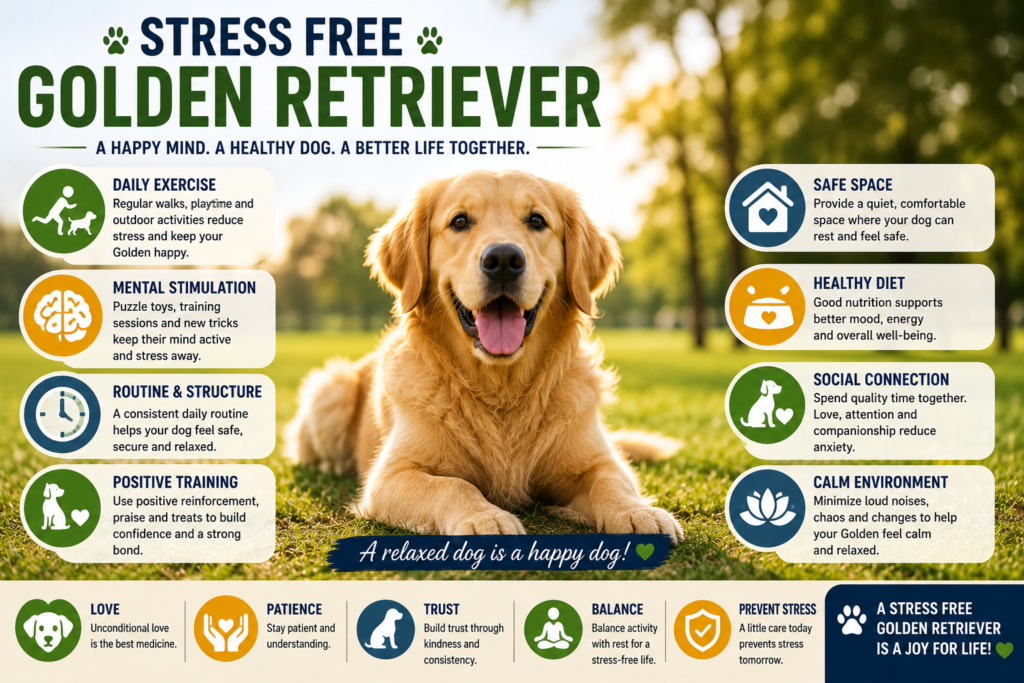
7. Separation Anxiety
Some Golden Retriever behavior problems happen when the dog is left alone.
Golden Retrievers often form strong bonds with their families. Some dogs become stressed when their owner leaves.
Signs of separation anxiety can include:
- Whining
- Barking
- Pacing
- Scratching doors
- Destructive chewing
- Drooling
- Trying to escape
- Excessive excitement when the owner returns
How to Help Separation Anxiety
Start by teaching your dog that short periods alone are safe.
Leave the room for a few minutes and return calmly.
Gradually increase the amount of time you are away.
Give your dog a comfortable resting area and a safe enrichment toy.
Do not make departures and arrivals overly dramatic.
If your dog has severe anxiety or tries to hurt themselves while alone, contact a veterinarian or qualified behavior professional.
8. Stealing Food
Food stealing is common because Golden Retrievers are often highly interested in food.
A dog that steals food from the kitchen counter may continue doing it if they are successful.
This behavior can also be dangerous because some human foods are unsafe for dogs.
How to Stop Food Stealing
Teach the “leave it” command.
Start with something that your dog does not value highly. Reward them when they ignore it.
Gradually practice with more tempting objects.
Also keep dangerous foods away from your dog’s reach.
Never intentionally reward your dog after they steal food.
9. Chasing People, Animals, and Vehicles
Chasing can become a serious safety issue.
A Golden Retriever may chase:
- Cats
- Birds
- Squirrels
- Joggers
- Bicycles
- Cars
This behavior can be dangerous near roads.
How to Stop Chasing
Work on recall training in a secure environment.
Teach your dog to come when called and reward them when they return.
Use a leash or long training line in areas where your dog could run into danger.
Never allow an untrained dog to run freely near traffic.
10. Not Listening to Commands
Sometimes owners believe their dog has suddenly become stubborn.
This can happen during adolescence.
Your dog may know “sit” perfectly at home but ignore the command at a busy park.
This happens because distractions make training more difficult.
How to Improve Obedience
Start training in a quiet environment.
Once your dog understands the command, gradually add distractions.
Reward correct responses.
Practice commands in different locations so your dog learns to listen regardless of the environment.
Keep sessions short and enjoyable.
What Is the Weakness of a Golden Retriever?
When people ask, “What is the weakness of a Golden Retriever?”, they may be asking about common personality challenges.
One common weakness is their strong need for human companionship.
Golden Retrievers generally enjoy spending time with their families. Some can struggle when left alone for long periods.
Another challenge is their love of food.
Food motivation can make training easier, but it can also lead to begging, stealing, and overeating if owners are not careful.
Their friendly personality can also cause excessive excitement around people.
These traits are not necessarily bad. With proper training, they can usually be managed successfully.
11. Begging for Food
Begging can become one of the most persistent Golden Retriever behavior problems if it is accidentally rewarded.
Your dog may sit beside the table, stare at you, paw at you, or whine.
If someone gives them food, your dog learns that begging works.
How to Stop Begging
Do not reward begging.
Instead:
- Feed your dog at regular times.
- Teach them to stay on their bed during meals.
- Reward calm behavior.
- Keep food away from the edge of counters.
- Make sure every family member follows the same rule.
It may take time if your dog has been rewarded for begging in the past.
12. Excessive Excitement
Some Golden Retrievers become extremely excited when they see their owner, another dog, a visitor, or a favorite toy.
They may bark, jump, run around, mouth your hands, or pull on the leash.
How to Teach Calm Behavior
Teach your dog that calm behavior leads to good things.
Before opening a door, ask your dog to sit.
Before giving a toy, wait for calm behavior.
Before greeting visitors, ask your dog to settle.
Over time, your dog learns that being calm is rewarding.
What Is the Hardest Stage of a Golden Retriever?
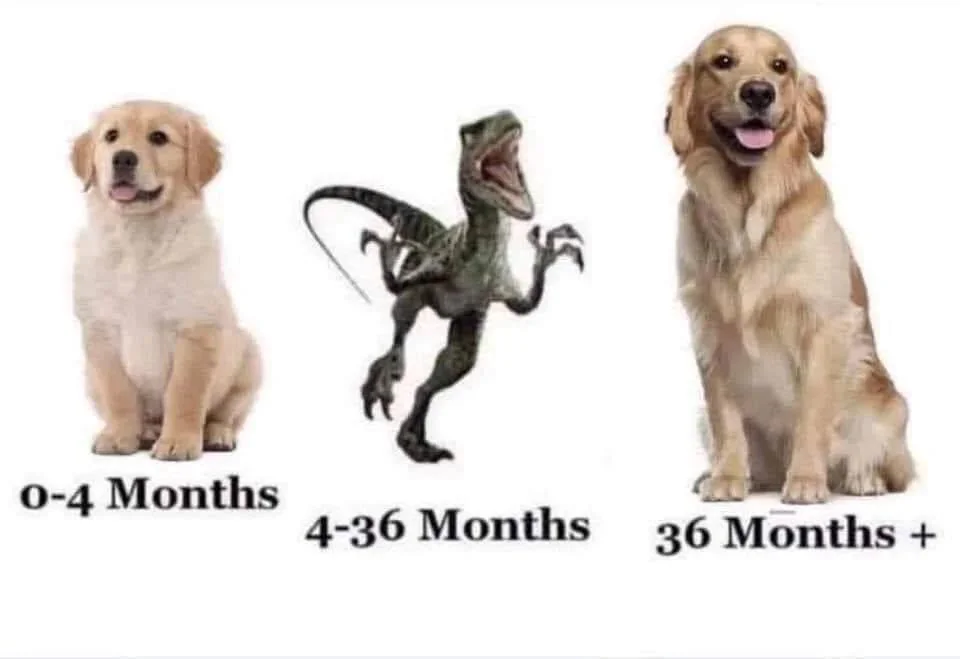
For many owners, the puppy and adolescent periods are the hardest.
Puppies need to learn:
- Potty training
- Bite control
- Basic commands
- Leash manners
- Socialization
- Household rules
They also have a lot of curiosity and energy.
The adolescent stage can be difficult for a different reason. Your dog becomes stronger and more independent. They may become distracted and seem to forget commands they previously knew.
This does not mean your dog is becoming bad.
It means you need to continue training.
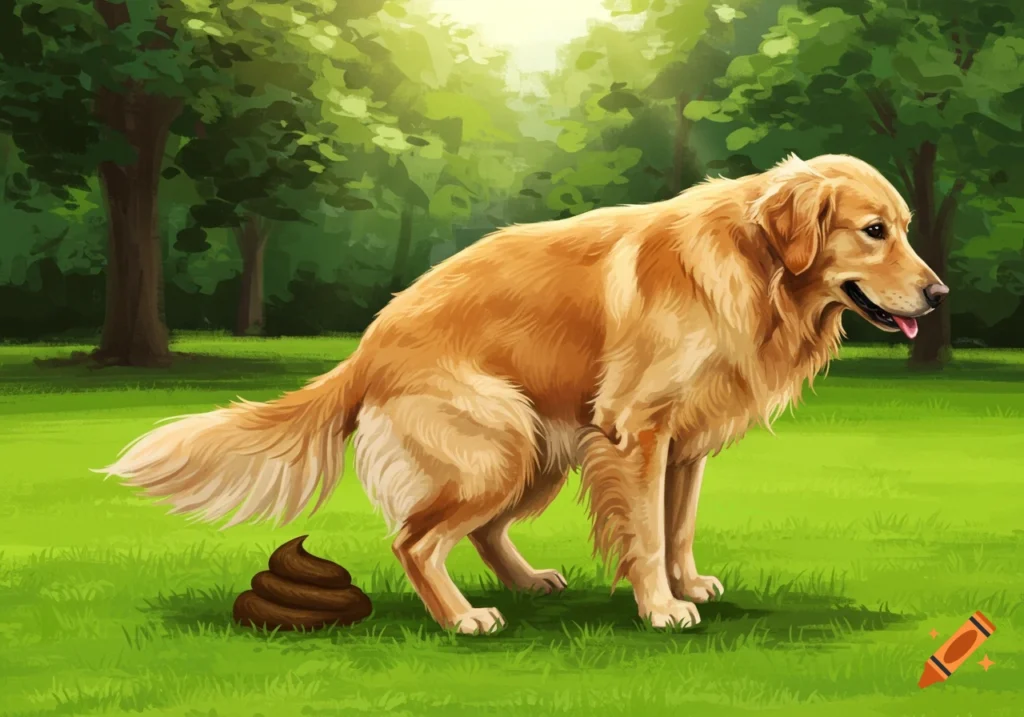
13. Potty Training Problems
Potty training can be frustrating during the puppy stage.
A puppy may have an accident because they are young and cannot hold their bladder for long.
They may also become distracted while outside.
How to Improve Potty Training
Take your puppy outside:
- After waking up
- After eating
- After drinking
- After playing
- Before bedtime
When your puppy goes in the correct place, praise them immediately.
Never punish a puppy for an accident after it has already happened. They may not understand why they are being punished.
If a fully house-trained adult dog suddenly starts having accidents, speak with your veterinarian because a medical issue may be involved.
14. Growling and Aggressive Behavior
Not every growl means a dog is aggressive.
A Golden Retriever may growl because they are:
- Afraid
- Uncomfortable
- In pain
- Protecting food
- Protecting a toy
- Feeling overwhelmed
Growling is a warning signal.
Punishing the warning without understanding the cause can make the situation worse.
What Should You Do?
Give your dog space.
Try to understand what happened immediately before the growling.
Do not force your dog into an uncomfortable situation.
If your dog repeatedly growls, snaps, or bites, seek professional help.
15. Resource Guarding
Resource guarding happens when a dog becomes protective of something they value.
This may include:
- Food
- Treats
- Toys
- Beds
- Chews
- Stolen objects
Your dog may freeze, stare, growl, or snap when someone approaches.
How to Manage It
Do not forcibly take valuable items from your dog.
Instead, teach your dog that giving something up leads to something positive.
For example, you can exchange a toy for a treat.
Serious resource guarding should be handled with help from a qualified professional.
What Is the Hardest Part of Owning a Golden Retriever?
Many owners say the hardest part of owning a Golden Retriever is keeping up with their energy and attention needs.
They may look calm and gentle as adults, but young Golden Retrievers can be very active.
Owners need to be prepared for:
- Daily exercise
- Training
- Socialization
- Grooming
- Mental stimulation
- Veterinary care
- Companionship
- Consistent rules
The first year can be especially demanding.
However, the effort you put into training early can make life much easier later.
Exercise and Behavior
Exercise is one of the best ways to reduce many Golden Retriever behavior problems.
A bored dog may create their own entertainment.
That entertainment may involve chewing furniture, digging, barking, or stealing household objects.
Age-appropriate activities can include:
- Walking
- Fetch
- Swimming
- Sniffing games
- Training games
- Playing in a secure yard
- Learning new tricks
Mental exercise is also important.
Try food puzzles, hide-and-seek, scent games, and obedience training.
Young puppies should not be pushed into excessive or strenuous exercise. Their activity should match their age and physical development.
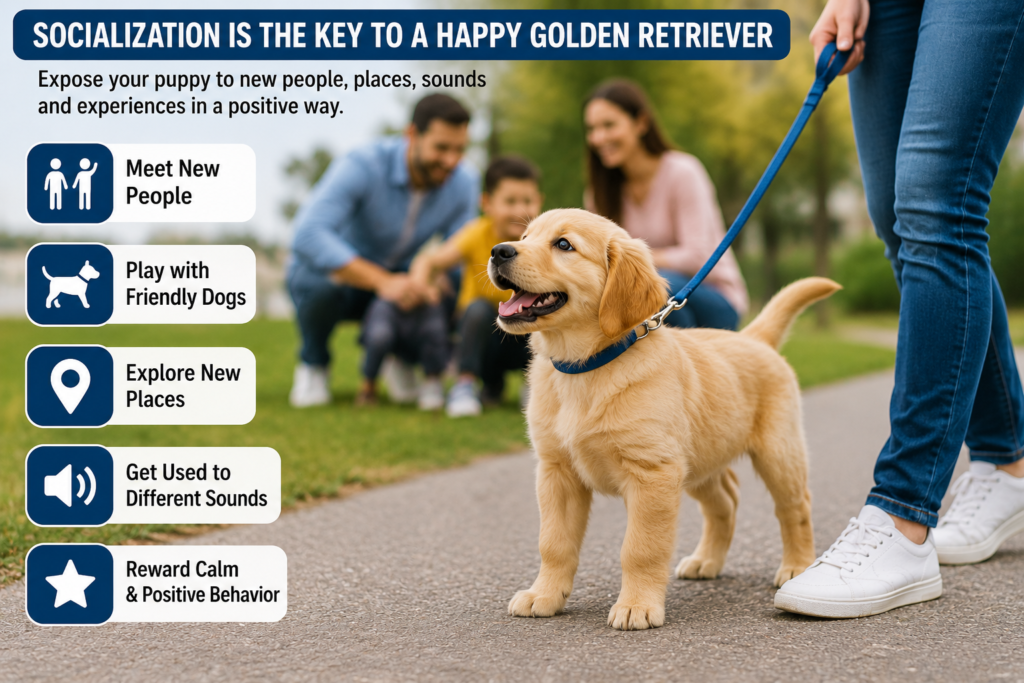
The Importance of Socialization
Good socialization can prevent many Golden Retriever behavior problems.
A properly socialized puppy learns how to feel comfortable around different people, friendly dogs, sounds, places, and everyday situations.
Introduce your puppy gradually to:
- Men and women
- Children
- Friendly dogs
- Cars
- Traffic
- Household noises
- Grooming
- Veterinary visits
- Different surfaces
- New environments
Always make these experiences positive.
Never force a frightened puppy into an interaction.
How to Prevent Behavior Problems
Preventing unwanted behavior is often easier than fixing it later.
Here are some simple habits to follow.
Start Training Early
Teach basic commands while your dog is young.
Set Clear Rules
Decide what your dog is allowed to do.
If jumping on furniture is not allowed, everyone should follow that rule.
Reward Good Behavior
Pay attention when your dog does something right.
Reward calmness, good manners, and obedience.
Provide Enough Exercise
A dog with appropriate physical activity is often easier to manage.
Give Mental Stimulation
Training, sniffing, puzzles, and interactive games help keep the brain active.
Continue Socialization
Do not stop socialization after puppyhood.
Continue giving your dog positive experiences throughout life.
A Simple Daily Routine
A predictable routine can help reduce many Golden Retriever behavior problems.
Morning
Take your dog outside for a bathroom break.
Follow this with age-appropriate exercise and a short training session.
Afternoon
Provide a mental activity such as a food puzzle or scent game.
Puppies should also have plenty of quiet sleep.
Evening
Take your dog for another walk or play session.
Practice a few basic commands.
Give your dog time to relax afterward.
Night
Take your puppy outside before bedtime.
Keep the environment calm and comfortable.
When Should You Get Professional Help?
Some Golden Retriever behavior problems need professional attention.
Speak with a veterinarian or qualified dog behavior professional if your dog:
- Bites people
- Shows serious aggression
- Attacks other animals
- Has severe separation anxiety
- Guards food aggressively
- Tries to injure themselves
- Suddenly changes behavior
- Shows signs of pain
- Becomes unusually fearful
A sudden behavior change can sometimes have a medical cause.
Getting professional help early can prevent a small problem from becoming more serious.
Quick Behavior Problem and Solution Chart
| Behavior | Possible Reason | Solution |
|---|---|---|
| Biting | Teething or play | Redirect to a toy |
| Barking | Boredom, fear, excitement | Find the trigger and reward calm behavior |
| Jumping | Excitement | Reward four paws on the floor |
| Chewing | Teething or boredom | Provide safe chew toys |
| Digging | Boredom or natural behavior | Increase activity and redirect digging |
| Pulling | Excitement | Practice loose-leash walking |
| Begging | Learned behavior | Do not reward begging |
| Separation anxiety | Stress when alone | Gradually teach alone time |
| Food stealing | Strong food motivation | Teach “leave it” |
| Chasing | Excitement | Practice recall and use a leash |
| Potty accidents | Young age or poor routine | Take the puppy out frequently |
| Growling | Fear, pain, guarding | Give space and seek help when needed |
Frequently Asked Questions
What is the biggest problem with Golden Retrievers?
The biggest challenge for many owners is their need for regular exercise, attention, companionship, and training. Without enough physical and mental activity, unwanted behaviors can develop.
What is the weakness of a Golden Retriever?
A common weakness is their strong need for companionship. Some Golden Retrievers may struggle with being alone, while their love of food can lead to begging or overeating if it is not managed.
What is the hardest stage of a Golden Retriever?
The puppy and adolescent stages are often the most challenging. Puppies need help with biting, chewing, potty training, and basic manners, while adolescent dogs can become energetic, distracted, and independent.
What is the hardest part of owning a Golden Retriever?
For many owners, the hardest part is keeping up with exercise, training, grooming, companionship, and mental stimulation. Young Golden Retrievers can be especially demanding.
Are Golden Retrievers difficult to train?
Generally, no. Golden Retrievers are intelligent and usually eager to please, which makes them highly trainable. However, they still need consistent training and repetition.
How do I stop my Golden Retriever from jumping?
Ignore jumping and reward your dog when all four paws are on the ground. Teach your dog to sit before greeting people.
Why does my Golden Retriever chew everything?
Puppies commonly chew because of teething and exploration. Adult dogs may chew because of boredom, anxiety, or insufficient mental stimulation.
Can adult Golden Retrievers learn new behaviors?
Yes. Adult dogs can learn new commands and habits. Training may take patience, but age does not prevent a dog from learning.
How much exercise does a Golden Retriever need?
Exercise needs depend on age, health, and individual energy level. Adult dogs generally need regular daily activity along with mental stimulation. Puppies need shorter and age-appropriate activities.
Final Thoughts
Golden Retrievers are loving and intelligent dogs, but they still need training and guidance. Their friendly personality does not automatically teach them good manners.
Most unwanted behaviors can be improved by understanding the reason behind them and teaching a better alternative.
The puppy and adolescent stages may be challenging, but they are also important learning periods. Consistent training during these stages can prevent many problems later in life.
Give your Golden Retriever enough exercise, mental stimulation, socialization, attention, and rest. Use positive reinforcement and avoid harsh punishment.
Most importantly, be patient.
Your dog may not learn everything immediately, but small improvements every day can lead to a major difference over time. With consistent care and training, your Golden Retriever can grow into a calm, friendly, confident, and well-behaved member of the family.

Leave a Reply