
Golden Retriever Stop Teething
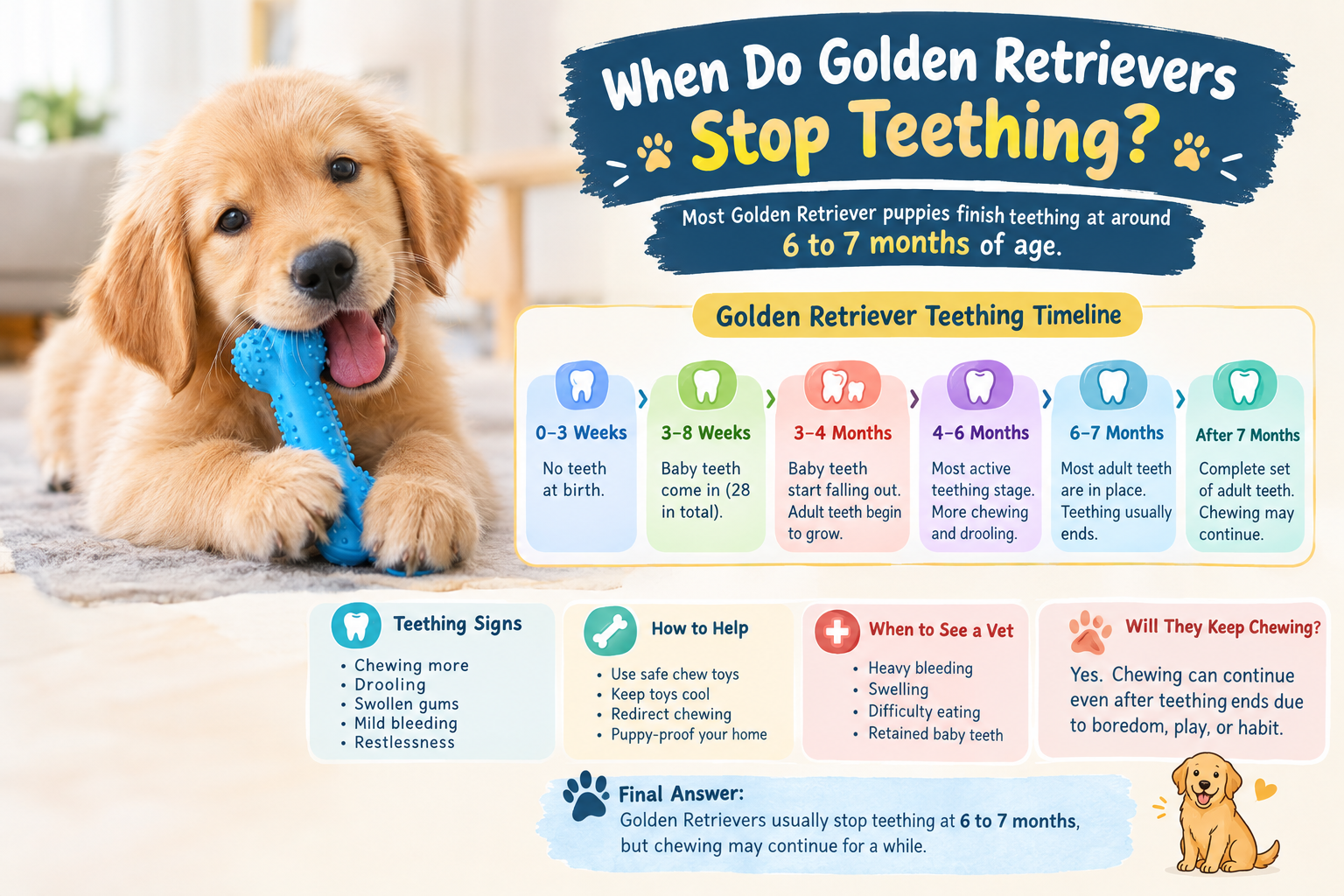
So, when do Golden Retriever stop teething? Most Golden Retriever puppies finish teething at around 6 to 7 months of age. By this time, most of their adult teeth have come in, and the urge to chew because of sore gums usually becomes much lower
If you have a Golden Retriever puppy, you may notice that your little dog wants to chew almost everything. Shoes, furniture, toys, hands, and even table legs can become tempting targets. This is usually because your puppy is going through the teething stage.
However, every puppy develops at a slightly different speed. Some may finish a little earlier, while others may continue chewing for several months because chewing is also a normal puppy behavior. so don’t worry about how your Golden Retriever stop teething.
When Does Golden Retriever Teething Start?

Golden Retriever puppies are normally born without visible teeth. Their baby teeth begin to appear when they are around 3 to 4 weeks old.
By about 6 to 8 weeks, most puppies have a full set of baby teeth. These small teeth are sharp and can make puppy biting quite painful.
The real teething period starts when these baby teeth begin falling out and adult teeth start growing in. it when take time for a golden retriever stop teething.
When Do Golden Retriever Puppies Start Losing Their Teeth?
Golden Retriever puppies usually start losing their baby teeth at around 3 to 4 months old.
You may find a small tooth on the floor, in a toy, or sometimes in your puppy’s food bowl. Don’t worry if you don’t find the teeth. Puppies often swallow their loose baby teeth while eating or playing, and this is usually harmless.
During this period, your puppy may chew more because the gums can feel uncomfortable.
Golden Retriever Teething Timeline
Understanding the Golden Retriever teething timeline can make this stage easier to manage.
0–3 Weeks
Golden Retriever puppies normally have no teeth when they are born. They mainly depend on their mother for milk and nutrition.
3–8 Weeks
Baby teeth begin to come through. By around 8 weeks, puppies usually have most or all of their baby teeth.
3–4 Months
This is when many puppies begin losing their baby teeth. Adult teeth start pushing through the gums.
You may notice increased chewing, drooling, or mild gum irritation.
4–6 Months
This is often the most active part of Golden Retriever puppy teething. More adult teeth appear, and your puppy may want to chew frequently.
6–7 Months
Most Golden Retrievers have their adult teeth by this age. This is why many owners ask, “When do Golden Retriever stop teething?”
For most puppies, the active teething stage is ending around this time.
After 7 Months
Your Golden Retriever should normally have a complete set of adult teeth. However, chewing does not always stop completely.
A young Golden Retriever may still chew because of boredom, excitement, habit, or simply because chewing is fun.
How Many Teeth Does a Golden Retriever Have?
An adult Golden Retriever normally has 42 permanent teeth.
Puppies have fewer teeth. They usually have 28 baby teeth, which are gradually replaced by adult teeth during the teething period.
This change from 28 baby teeth to 42 adult teeth is one reason puppies chew so much during these months.
What Are the Signs of Golden Retriever Teething?
There are several common Golden Retriever teething symptoms you may notice.
Your puppy may:
- Chew more than usual
- Bite toys, furniture, or household items
- Have slightly swollen gums
- Drool more
- Have mild gum bleeding
- Eat more slowly
- Become slightly restless
- Leave small teeth around the house
- Have mild bad breath
These signs are usually normal during puppy teething.
However, severe bleeding, major swelling, strong pain, difficulty eating, or other unusual symptoms should be checked by a veterinarian.

Why Does My Golden Retriever Chew So Much While Teething?
Teething can make a puppy’s mouth uncomfortable. Chewing gives the puppy something to focus on and can provide relief to sore gums.
There is another reason too: Golden Retrievers are naturally curious dogs. Puppies learn about their surroundings with their mouths.
So even after Golden Retriever stop teething, your puppy may still chew things.
This is why training and providing suitable chew toys are important.
How to Help a Golden Retriever Puppy During Teething
You cannot stop the normal teething process, but you can make your puppy more comfortable.
Give Safe Teething Toys
Provide toys that are made for puppies and are strong enough for chewing. Choose toys that are appropriate for your puppy’s size and age.
Avoid toys that break into small pieces because swallowed pieces can be dangerous.
Keep Some Toys Cool
Some puppy-safe chew toys can be cooled in the refrigerator. A cool toy may feel soothing on sore gums.
Do not give extremely hard or frozen objects that could damage your puppy’s teeth.
Redirect Chewing
If your Golden Retriever puppy starts chewing furniture or shoes, calmly redirect the puppy to an appropriate chew toy.
Reward your puppy when they choose the toy.
This teaches your dog what is okay to chew.
Puppy-Proof Your Home
During the Golden Retriever puppy teething stage, keep shoes, wires, children’s toys, and other dangerous objects out of reach.
A curious puppy can quickly get into trouble.
Does Teething Make Golden Retrievers Bite More?
Yes, teething can make puppies want to bite and chew more.
However, not every bite is caused by teething. Puppies also bite during play, excitement, and when learning how to control their mouths.
This is why puppy bite training is important.
Instead of hitting or shouting at your puppy, redirect biting toward an appropriate toy. Consistent training helps your puppy learn bite inhibition.

When Do Golden Retrievers Stop Biting?
This question is closely related to when do Golden Retriever stop teething, but they are not exactly the same.
Most Golden Retriever stop teething as they mature and learn better behavior. Teething usually finishes around 6–7 months, but playful biting can continue if the puppy has not learned proper bite control.
Training, exercise, socialization, and appropriate toys can all help reduce unwanted biting.
What If My Golden Retriever Is Still Teething After 7 Months?
If your Golden Retriever is still chewing at 7 months, don’t automatically assume that something is wrong.
The active teething process should generally be finished around this age, but chewing behavior can continue.
Check your puppy’s mouth. You should see adult teeth rather than baby teeth.
Sometimes a baby tooth does not fall out even though the adult tooth has started growing. This is called a retained baby tooth.
If you notice two teeth occupying the same space, especially if an adult tooth is growing beside a baby tooth, ask your veterinarian to examine it.
What Is a Retained Baby Tooth?
A retained baby tooth is a puppy tooth that stays in place after the adult tooth starts coming through.
It can sometimes cause crowding or affect how the adult teeth develop.
If you suspect your Golden Retriever has a retained baby tooth, don’t try to pull it out yourself. A veterinarian can check the mouth and decide whether treatment is needed.
When Should You Worry About Puppy Teething?
Most teething symptoms are mild. However, contact your veterinarian if your puppy has:
- Heavy or persistent bleeding
- Severe mouth swelling
- Significant pain
- Difficulty eating or drinking
- A broken tooth
- Strong or unusual mouth odor
- Swelling around the face
- A baby tooth that remains while the adult tooth grows in
These signs may indicate a problem that is not simply normal teething.
Do Golden Retriever Stop Chewing After Teething?
Not always.
This is an important point for new Golden Retriever owners.
When Golden Retriever stop teething , the physical need to chew because of sore gums usually decreases. But chewing itself is normal dog behavior.
Your Golden Retriever may continue chewing because of:
- Boredom
- Lack of exercise
- Anxiety
- Excitement
- Habit
- Curiosity
- Lack of suitable chew toys
Regular exercise, mental stimulation, training, and appropriate toys can help.
How Can I Stop My Golden Retriever From Chewing Furniture?
Start by managing the environment. Keep tempting objects away from your puppy and provide several safe chew toys.
When your puppy chooses furniture, calmly redirect them to a chew toy. Praise them when they use the correct item.
Avoid punishing your puppy after the behavior. Your goal is to teach your Golden Retriever what they should chew.
Consistency is more effective than punishment.
Golden Retriever Adult Teeth: What to Expect
By around 6–7 months, most Golden Retrievers should have their adult teeth.
The adult teeth are stronger and larger than puppy teeth. Your dog’s mouth should gradually look more like an adult dog’s mouth.
Once the adult teeth are fully developed, continue regular dental care. Starting good dental habits while your dog is young can make future teeth cleaning much easier.
Final Answer: When Do Golden Retriever Stop Teething?
So, when do Golden Retriever stop teething? Most Golden Retriever puppies finish their active teething stage at around 6 to 7 months of age.
The process usually starts around 3–4 months, when baby teeth begin falling out and adult teeth start coming in. During this time, chewing, mild gum irritation, drooling, and increased biting can be normal.
Remember that stopping teething does not always mean stopping chewing. A young Golden Retriever may continue chewing because of boredom, play, curiosity, or habit.
Give your puppy safe chew toys, provide enough exercise and mental stimulation, and use positive training. If you notice severe pain, heavy bleeding, swelling, or retained baby teeth, speak with your veterinarian.
Leave a Reply